Hi, I’m Jen! ❤️
As an Integrative Nutrition Health Coach, I’m on a mission to help you become the healthiest, happiest version of yourself. I specialize in hormone health, gut health, and celiac disease, turning complex science into simple, daily habits. Welcome to my corner of the wellness world—I’m so glad you’re here!

Ready to Begin Your Wellness Journey?

Join the community and get supportive tips, inspiration, and updates.

  • The Glitter Theory: Understanding Cross-Contamination with Celiac Disease

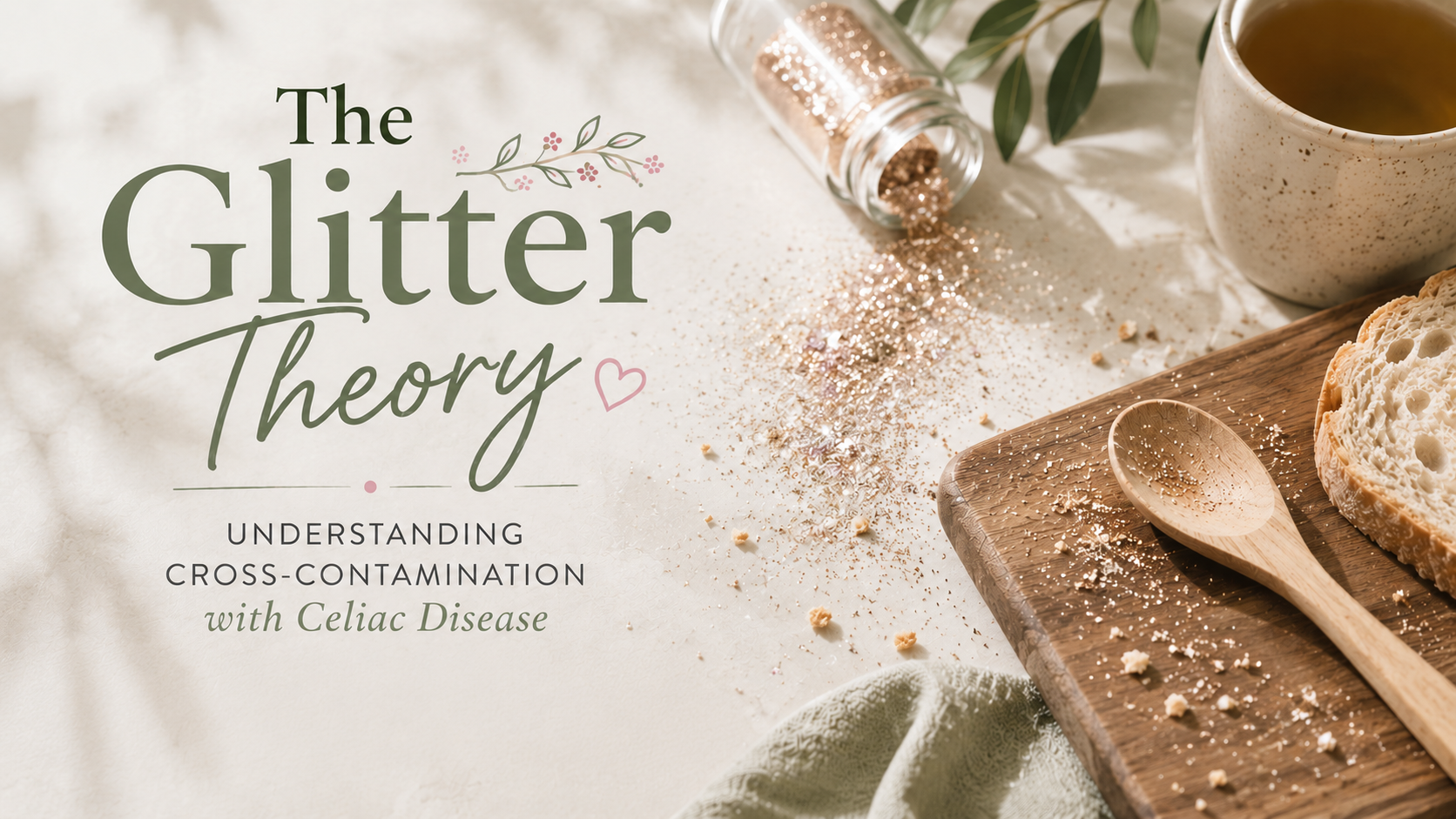
    The Glitter Theory: Understanding Cross-Contamination with Celiac Disease

    Picture this: You’re working on a craft project at the kitchen table and accidentally knock over a jar of superfine glitter. You sweep it up, wipe the table, and think you’re done.

    But three days later, you find a speck on your cheek. You find it on your clothes. It’s somehow on the dog.

    That is exactly what it’s like to live with celiac disease. To most people, a breadcrumb is just a crumb—easy to brush away. But to a celiac, gluten is like that glitter: sticky, invisible, and impossible to simply “pick off” once it touches our food.

    This May, for Celiac Awareness Month, I want to skip the medical definitions and talk about the reality of “The Gluten Glitter.” It’s the perfect way to explain why I ask so many questions at restaurants, and why “just a little bit” is actually a really big deal.

    And the hardest part? Most of the time, people can’t actually see the danger.

    There’s no dramatic reaction in the moment. No flashing warning sign. Just invisible exposure that can quietly trigger inflammation and damage long after the meal is over.

    That’s why so many people with celiac disease become hyper-aware of kitchens, utensils, labels, and shared spaces. It’s not about being “difficult” or overly cautious. It’s about trying to stay healthy in a world where gluten can hide almost anywhere.

    Where Gluten “Glitter” Loves to Hide

    When you live with celiac disease, setting up a safe kitchen requires thinking like a detective. Gluten isn’t just a physical ingredient; it’s a microscopic residue that clings to surfaces.

    If you share a kitchen, here are the most common “hidden glitter” spots you need to watch out for:

    • Porous Surfaces: Items made of wood, plastic, or silicone (like wooden spoons, cutting boards, and rolling pins) develop tiny, microscopic grooves over time. These cracks hold onto “glitter” even after being washed, meaning they can easily transfer gluten back into a safe meal.
    • The Double-Dip Danger: This is the ultimate kitchen trap. Think about jars of peanut butter, jam, and butter tubs. If someone dips a knife into a jar, spreads it onto regular wheat toast, and then dips that same knife back into the jar for a second scoop, the entire container is officially “glitter-bombed.” This cross-contaminates the contents, making them entirely unsafe for a celiac to use.
    • Appliances and Cookware: Toasters are notorious because crumbs naturally pool at the bottom, blowing around every time a new slice drops. Pasta strainers are another hidden culprit; gluten from regular pasta gets permanently stuck in the fine mesh, transferring directly to your gluten-free noodles.
    • Condiments: The physical design of your food packaging matters. Open-mouth jars are high-risk zones due to shared utensils, whereas squeeze bottles for mayo, mustard, and ketchup are naturally safe because the food only flows one way—out!

    The Part People Don’t See

    One of the hardest parts of living gluten-free isn’t always the food itself—it’s the constant awareness.

    • It’s walking into a restaurant and mentally scanning for risks before you even sit down.
    • It’s wondering if someone used the same spoon.
    • It’s feeling awkward asking questions when everyone else is ordering effortlessly.

    And honestly, sometimes it’s exhausting.

    People often think celiac disease is “just avoiding bread,” but it becomes a way of thinking, planning, and navigating daily life. That’s why compassion and understanding matter so much.

    “Hidden Products”: It’s Not Just About Food

    One of the biggest surprises for many people diagnosed with celiac disease is realizing gluten can also show up in everyday products.

    Things like:

    • Lip balm
    • Lipstick
    • Toothpaste
    • Lotions and hand cream
    • Skincare products
    • Makeup products

    While gluten is not typically absorbed through the skin, products used around the mouth or on the hands can increase the risk of accidental exposure.

    At first, this can feel overwhelming. But over time, you learn where to focus your energy, make simple swaps, and create routines that help you feel safer and more confident.

    Myth-Busting “Just a Little Bit”

    Myth: “Can’t you just eat around it?”

    The Reality: If I sprinkled neon pink craft glitter all over the crust of a sandwich, you wouldn’t just cut the crust off and happily eat the middle. You know the tiny particles are still lingering on the rest of the bread. The same rule applies to gluten—you cannot simply pick the croutons off a salad or slide a regular bun off a burger. The residue remains behind.

    Myth: “Heat kills it, right?”

    The Reality: Gluten is a protein, not a living bacteria. Just like you can’t burn craft glitter away into nothingness, you cannot “cook the gluten out” of a shared restaurant fryer or a pot of boiling water. If regular onion rings were fried in that oil, the “glitter” is floating in it, ready to coat your gluten-free french fries.

    Myth: “I wiped the crumbs off the counter.”

    The Reality: If you try to wipe up fine glitter with a dry rag, it just smears across the surface. Gluten does the exact same thing. A casual swipe with a sponge doesn’t make a counter safe. To actually remove gluten, you need soap, hot water, and physical friction to break the sticky bond.

    A Note to the “Support Squad”

    If you are a friend, family member, or coworker of someone with celiac disease, please know this: we are not trying to be difficult.

    When we question the server at a restaurant, ask to look at food labels, or insist on bringing our own food to your dinner party, we are just trying to avoid the invisible glitter. We aren’t being high-maintenance; we are managing a serious autoimmune disease that affects our long-term health. We’re simply trying to protect our health in the safest way possible.

    The best gift you can give the celiac in your life is your understanding. You don’t have to fully change your diet, but taking a second to wash your hands, using a fresh knife, or buying squeeze bottles helps us feel incredibly safe, seen, and cared for. And trust me… we notice those efforts more than you realize.

    A Simple Place to Start

    If you’re newly diagnosed or feeling overwhelmed by the gluten-free lifestyle, I created a free Gluten-Free Starter Guide to help simplify the process.

    Inside you’ll find:

    • Foods to avoid
    • Simple meal ideas
    • Hidden gluten tips
    • Daily habits to support your gut
    • Practical ways to feel more confident living gluten-free

    Wishing you health & happiness!!

    Until next time,

    Home » MailPoet Page

    How do you explain cross-contamination to your friends and family? Do you use the “glitter theory,” or do you have another favorite analogy? Drop a comment below and let me know—I’d love to hear how you navigate the invisible glitter!
  • Meditation for Stress Relief

    Meditation for Stress Relief

    Meditation is to your mind what sleep is to your body—rest. In my last post, we looked at how stress impacts your hormones. Today, as promised, we’re diving into my favorite tool for finding balance: meditation.

    So, let’s talk about meditation and mindfulness.  I actually just finished a course on meditation and I thought this was a perfect time to talk about it.  I have been meditating for years now but not that often or on a daily basis.  I would love to get to that though.  I am a work in progress 🙂  I used to meditate before going to bed at night and it really helped to clear my mind and helped me get to sleep easier. 

    When I would talk about it people kinda thought it was weird.  The problem is they didn’t know anything about it.  So I finally got my sister to try it, she was like you are right, I love it!  So you don’t know until you actually give it a real try for yourself.  The bonus is that it’s so good for your health and after hearing some of the heart health benefits I hope you give it a try for yourself!!

    Benefits of Meditation for Stress and Heart Health

    Meditation and mindfulness have been shown to have powerful effects on both mental and physical health. Some of the key benefits include:

    • reducing stress by lowering cortisol production
    • lowering blood pressure
    • improving heart rate variability (HRV)
    • reducing inflammation
    • enhancing emotional well-being
    • improving sleep quality by calming the mind before bed

    Heart rate variability (HRV) refers to the variation in time between heartbeats and is an important indicator of how well your nervous system is functioning. A higher HRV is generally associated with better heart health, lower stress levels, and improved resilience.

    Meditation helps improve HRV by balancing the nervous system — supporting both the “fight or flight” response and the “rest and digest” state.

    The Connection Between Stress and Heart Health

    We all know stress isn’t good for us, but chronic stress is actually a major risk factor for heart disease. When we practice mindfulness, we trigger a “relaxation response” that helps lower the production of stress hormones like cortisol.

    This shift doesn’t just feel good—it has a physical impact on your numbers. By promoting relaxation, you can help reduce both systolic and diastolic pressure, lowering your overall blood pressure.

    Reducing Inflammation

    Chronic inflammation is another hidden danger to our health, often linked to heart issues. Research shows that mindfulness can actually reduce markers of inflammation in the body. One specific marker is the C-reactive protein (CRP); by keeping CRP levels in check, meditation helps protect your entire cardiovascular system.

    Emotional Balance and Sleep

    Meditation also helps with emotional regulation. By managing the anxiety and depression often linked to heart disease, you create a positive ripple effect for your heart health.

    Finally, we all want our “beauty sleep,” but quality sleep is vital for your heart. Using meditation techniques before bed calms the mind, making it easier to fall asleep and stay asleep.

    Overall, mindfulness and meditation can be part of a holistic approach to maintaining heart health by reducing stress, lowering blood pressure, and fostering emotional balance. 

    Types of Meditation

    Meditation is the practice of quieting ones thoughts.  There are many meditation styles and techniques but the two most popular today are transcendental and mindfulness. 

    Transcendental uses a silent mantra repetition, where a mantra (which is a word or phrase), is repeated throughout the session.  The mantra gives your mind something to focus on to help keep your mind from wandering off.  This is the type of meditation I do because that is what works for me. 

    Mindfulness meditation is rooted in Buddhism.  This type is about being aware of your thoughts, feelings, sensations and surroundings through a gentle lens.  The purpose is to allow awareness of every thought and emotion as it happens and then to let them go, peacefully without judgement. One is not necessarily better than the other, it’s more about meditating in a way that works best for you. 

    How to Start Meditating (Simple Steps)

    To meditate you don’t necessarily need to be sitting on the floor, just make sure you are comfortable. There are just three simple steps for meditation:

    1. Breathe slowly
    2. Keep your mind quiet
    3. Repeat those steps

    Keeping your mind quiet simply involves focusing on your breath and if you notice yourself drifting off, you just need to re-focus back to your breathing. This may take time to keep your focus but as with anything the more you practice the easier it will become.

    Meditation doesn’t require perfection — just a willingness to begin.

    There are so many other things that mindfulness and meditation can help with.  Meditation is also said to improve mental clarity and foster creativity.  Meditation is a powerful tool that is free, which makes it an easy and beneficial habit to incorporate into your daily routine. 

    A Simple Way to Start Supporting Your Health

    If you’re looking for more simple, supportive ways to reduce stress and improve your overall wellness, I created a free Gut Healing Starter Guide to help you get started.

    Inside, you’ll find gentle steps to support digestion, reduce stress, and begin restoring balance in your body.

    Final Thoughts

    Meditation and mindfulness are powerful practices that can support both your mental and physical health.

    By reducing stress, supporting heart health, improving sleep, and helping you reconnect with your body, they can play an important role in a more balanced and holistic approach to wellness.

    Start small, stay consistent, and give yourself the space to learn what works best for you.

    Wishing you health & happiness!!

    Until next time,

  • The Effects of Stress on your hormones: A Guide to Restoring Balance.

    The Effects of Stress on your hormones: A Guide to Restoring Balance.

    April is Stress Awareness Month, and while we all deal with stress, many of us don’t realize how deeply it impacts our internal chemistry. Whether it’s a looming deadline or getting stuck in traffic, stress triggers a powerful reaction.

    While short bursts of stress can help us stay alert in a crisis, chronic stress is a different story. It wreaks havoc by disrupting our hormones—the body’s essential chemical messengers.

    The “Fight-or-Flight” Alarm

    When you’re stressed, your brain sounds an alarm. The hypothalamus signals your adrenal glands to release cortisol and adrenaline. In small doses, cortisol provides energy and focus. The problem? When stress never stops, your cortisol levels stay high, leading to a “cascade” of health issues:

    • Immune System & Mood: High cortisol over time can weaken your immunity and lead to anxiety, depression, or “brain fog.”
    • Insulin Resistance: Cortisol raises blood sugar for quick energy. Constant stress can lead to insulin resistance, a precursor to Type 2 diabetes.
    • Thyroid Slowdown: Cortisol interferes with thyroid hormone conversion, resulting in unexplained fatigue and weight gain.
    • Sleep Sabotage: Cortisol and melatonin work in opposition. If cortisol stays high at night, you’ll find it nearly impossible to fall (or stay) asleep.

    How to Support Your Hormones Naturally

    The good news? You can manage these effects with simple, daily habits:

    1. Move Mindfully: Regular exercise is great, but don’t underestimate a simple walk. Fresh air and movement lower the “fight-or-flight” response.
    2. Eat for Balance: Focus on whole foods and healthy fats. Try to limit caffeine and sugar, as these can actually mimic stress in the body and worsen imbalances.
    3. Prioritize Sleep: Quality rest is when your hormones recalibrate.
    4. Practice Mindfulness: Techniques like meditation and breathwork are scientifically proven to lower cortisol. (Stay tuned—we’ll dive deep into meditation in my next post!)
    5. Connect Socially: Connecting with others socially is important and you should always seek support when needed.

    Our bodies are a complex, interconnected system and hormones are its messengers.  When stress becomes chronic, it disrupts the communication, leading to a cascade of health issues.  The key is not to eliminate stress completely, as we all know this is not possible, but to manage it wisely.  By recognizing the signs and taking steps to manage it, you can protect your health and improve your overall well-being.  Remember, self-care isn’t selfish – it’s essential 

    About the Author
    Hi! I’m Jen. I’m an Integrative Nutrition Health Coach specializing in hormone health, gut health, and celiac disease. I have a passion for wellness and helping others find their happiest, healthiest selves.


    Wishing you health & happiness!!

    Until next time,